Rosuvastatin and Athletic Performance: Is There an Effect
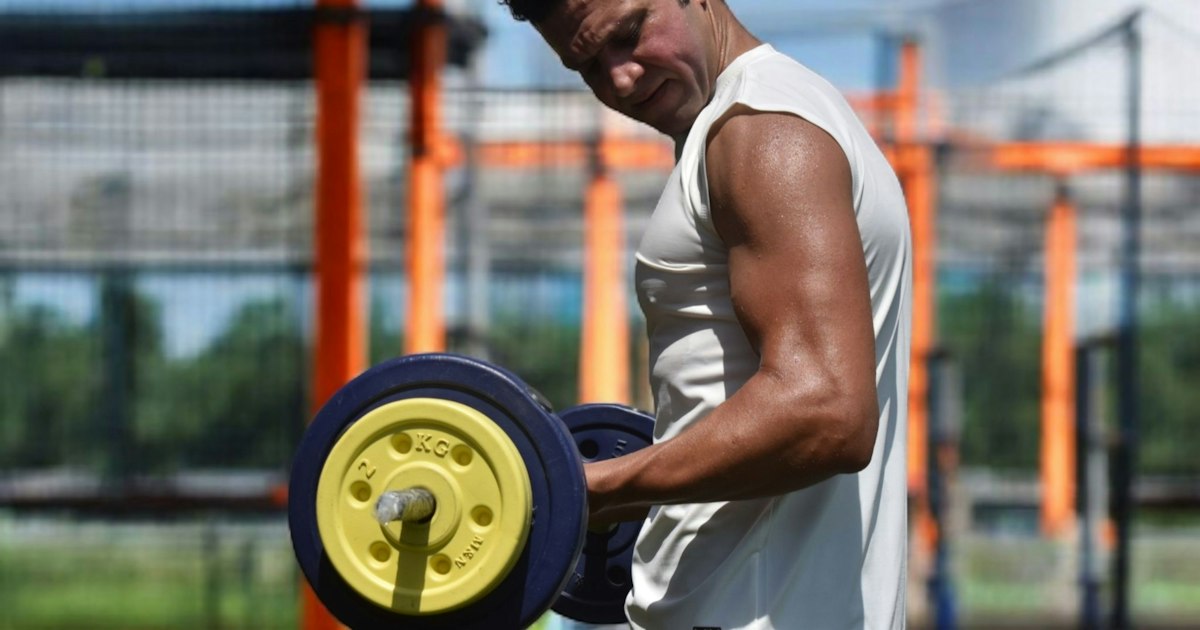
More and more active people are taking statins, from marathon veterans to athletes with familial hypercholesterolemia. Does rosuvastatin interfere with training, and can it affect strength and endurance? The editorial team has gathered study data and explains what follows from it in practice.
Rosuvastatin and sport: framing the question
Rosuvastatin is not a performance-enhancing agent and is not on the Prohibited List of the World Anti-Doping Agency (WADA). An athlete prescribed it for medical indications may take the drug without a therapeutic use exemption. The question is different: does the statin interfere with training, recovery and progress.
The relevance of the topic grows every year. Statins are taken by millions of older people, among them many sport veterans, amateur runners, cyclists and gym-goers. A separate group are young athletes with familial hypercholesterolemia who need treatment for decades.
In addition, in strength-sport circles rosuvastatin is sometimes discussed as a way to “fix the lipid panel.” People taking anabolic steroids characteristically show reduced HDL and elevated LDL (Pope et al., 2014). However, a statin does not remove the cause of these changes and does not offset the other cardiovascular risks of steroids, so this approach is not a way to make them safe.
In this article the editorial team focuses on what is known from studies about the effect of statins on muscle strength, endurance and adaptation to training, and on the practical conclusions that follow.
Muscle symptoms on statins
The most common side effect of statins that active people complain about is muscle symptoms: pain, stiffness, weakness, cramps. The consensus of the European Atherosclerosis Society describes them as a spectrum from mild myalgia with no change in tests to rare rhabdomyolysis (Stroes et al., 2015).
The mechanism has not been definitively clarified. Among the hypotheses are reduced synthesis of coenzyme Q10 and impaired mitochondrial function, changes in the synthesis of regulatory proteins that require products of the mevalonate pathway, and effects on calcium metabolism in muscle cells. Physical exertion itself causes microdamage to fibers, so the combination of the two factors theoretically increases the risk.
At the same time, in blinded randomized trials some muscle complaints on statins do not differ from placebo. This is explained by the nocebo effect: the expectation of side effects itself makes people notice ordinary post-exercise sensations and attribute them to the drug (Newman et al., 2019).
For rosuvastatin specifically, it has been hypothesized that because of its hydrophilicity it penetrates muscle tissue less than lipophilic statins. However, the editorial team is not aware of convincing comparative clinical data proving a substantial advantage of rosuvastatin for athletes.
| Manifestation | Creatine kinase | Significance for training |
|---|---|---|
| Myalgia | Normal or slightly elevated | Discomfort, possible loss of motivation |
| Myopathy | Substantially elevated | Requires a pause in treatment and in loading |
| Rhabdomyolysis | Sharply elevated, myoglobinuria | Emergency, risk to the kidneys |
Strength and performance: what the studies showed
The largest randomized study on this topic is STOMP. In it, healthy adults received 80 mg of atorvastatin or placebo for 6 months. On average, muscle strength and physical performance did not differ between the groups, although creatine kinase in the statin group rose moderately and myalgia was recorded more often than on placebo (Parker et al., 2013).
So for most people a statin under normal conditions does not make the muscles weaker. At the same time, in a minority of participants the symptoms were real, and it is they who determine individual tolerance. It is worth remembering that STOMP studied atorvastatin, not rosuvastatin, and did not include professional athletes.
As for the elite, observations by Austrian researchers of professional athletes with familial hypercholesterolemia are interesting: only a minority of them could tolerate statin therapy because of muscle complaints, whereas in the general population tolerance is much better (Sinzinger & O’Grady, 2004). The study was small and uncontrolled, but it shows that under very high loads the problem becomes more noticeable.
For strength sports there is little data on the effect of statins on hypertrophy and strength results. Experimental work in animals and cells suggests a possible effect on regeneration, but it cannot be transferred directly to people who train.
Aerobic adaptation and mitochondria
A separate question is whether a statin slows adaptation to training. A study by Mikus and colleagues showed that in overweight people who performed aerobic training for 12 weeks, adding simvastatin substantially weakened the gain in maximal oxygen uptake compared with training without the drug. In the statin group there was also no increase in the content of mitochondrial enzymes in the muscles (Mikus et al., 2013).
The result prompted wide debate. The study was small, involved simvastatin and sedentary people with obesity. Later work gave mixed results, and there is currently no consensus on how far this effect applies to other statins, including rosuvastatin, and to trained people.
At the same time, the conclusions should not be distorted. Even if a statin slightly reduces the gain in aerobic measures, for a person at high cardiovascular risk the reduced likelihood of heart attack and stroke usually matters more than a few percent of VO2max. Physical activity and statins together give the best prognosis.
For athletes the practical conclusion is this: if progress in endurance has noticeably stalled while on a statin, this should be discussed with a doctor rather than stopping treatment on your own.
Practical recommendations for those who train
People who combine training and rosuvastatin as prescribed by a doctor should keep in mind a few rules that follow from the guidelines and studies:
- before starting treatment, have creatine kinase measured after several days of rest so you know your “baseline”;
- tell your doctor about the type and volume of your training, especially eccentric and prolonged loads;
- avoid dehydration and sharp increases in training volume, especially in the heat;
- with severe muscle pain and dark urine, seek help immediately;
- do not combine the statin on your own with drugs that raise its level.
As for coenzyme Q10: the logic of taking it is understandable, but meta-analyses of randomized trials give conflicting results, and guidelines do not recommend it routinely for preventing muscle symptoms (Stroes et al., 2015). Taking it is possible, but you should not expect a guaranteed effect.
If muscle symptoms interfere with training, a doctor may change the dose, switch to another statin, take the drug every other day (rosuvastatin has a long half-life) or add non-statin agents. These decisions are within the doctor’s competence.
Finally, “treating” the lipid panel with a statin while on anabolic steroids does not make such use safe. Steroids affect the myocardium, blood pressure, blood clotting and other systems, and a statin does not neutralize these effects.
Editorial conclusions
Rosuvastatin is not banned by WADA and does not improve athletic performance. In most people statins do not reduce muscle strength, as confirmed by the randomized STOMP study.
At the same time, in some people, especially under very high loads, muscle symptoms are real and can limit training. There is also evidence that statins can weaken aerobic adaptation, though these results are conflicting.
For a person at high cardiovascular risk the benefit of the statin outweighs the possible loss in performance measures, and competent monitoring of CK and well-being makes it possible to combine treatment with sport.
The editorial team also recommends reading our materials on tests while taking rosuvastatin, on its contraindications and on the effect of ursodeoxycholic acid on athletic performance.
References
- Parker BA, Capizzi JA, Grimaldi AS, et al. Effect of statins on skeletal muscle function. Circulation. 2013;127(1):96–103.
- Mikus CR, Boyle LJ, Borengasser SJ, et al. Simvastatin impairs exercise training adaptations. J Am Coll Cardiol. 2013;62(8):709–714.
- Sinzinger H, O'Grady J. Professional athletes suffering from familial hypercholesterolaemia rarely tolerate statin treatment because of muscular problems. Br J Clin Pharmacol. 2004;57(4):525–528.
- Stroes ES, Thompson PD, Corsini A, et al. Statin-associated muscle symptoms: impact on statin therapy — European Atherosclerosis Society Consensus Panel Statement on Assessment, Aetiology and Management. Eur Heart J. 2015;36(17):1012–1022.
- Newman CB, Preiss D, Tobert JA, et al. Statin safety and associated adverse events: a scientific statement from the American Heart Association. Arterioscler Thromb Vasc Biol. 2019;39(2):e38–e81.
- Pope HG Jr, Wood RI, Rogol A, et al. Adverse health consequences of performance-enhancing drugs: an Endocrine Society scientific statement. Endocr Rev. 2014;35(3):341–375.
- World Anti-Doping Agency. The World Anti-Doping Code: International Standard — Prohibited List. Montreal: WADA; оновлюється щороку.
Andriy Melnyk
A strength-sports coach and author of programs for beginner and intermediate levels. Writes about training planning.